Critical Communications World 2026, London
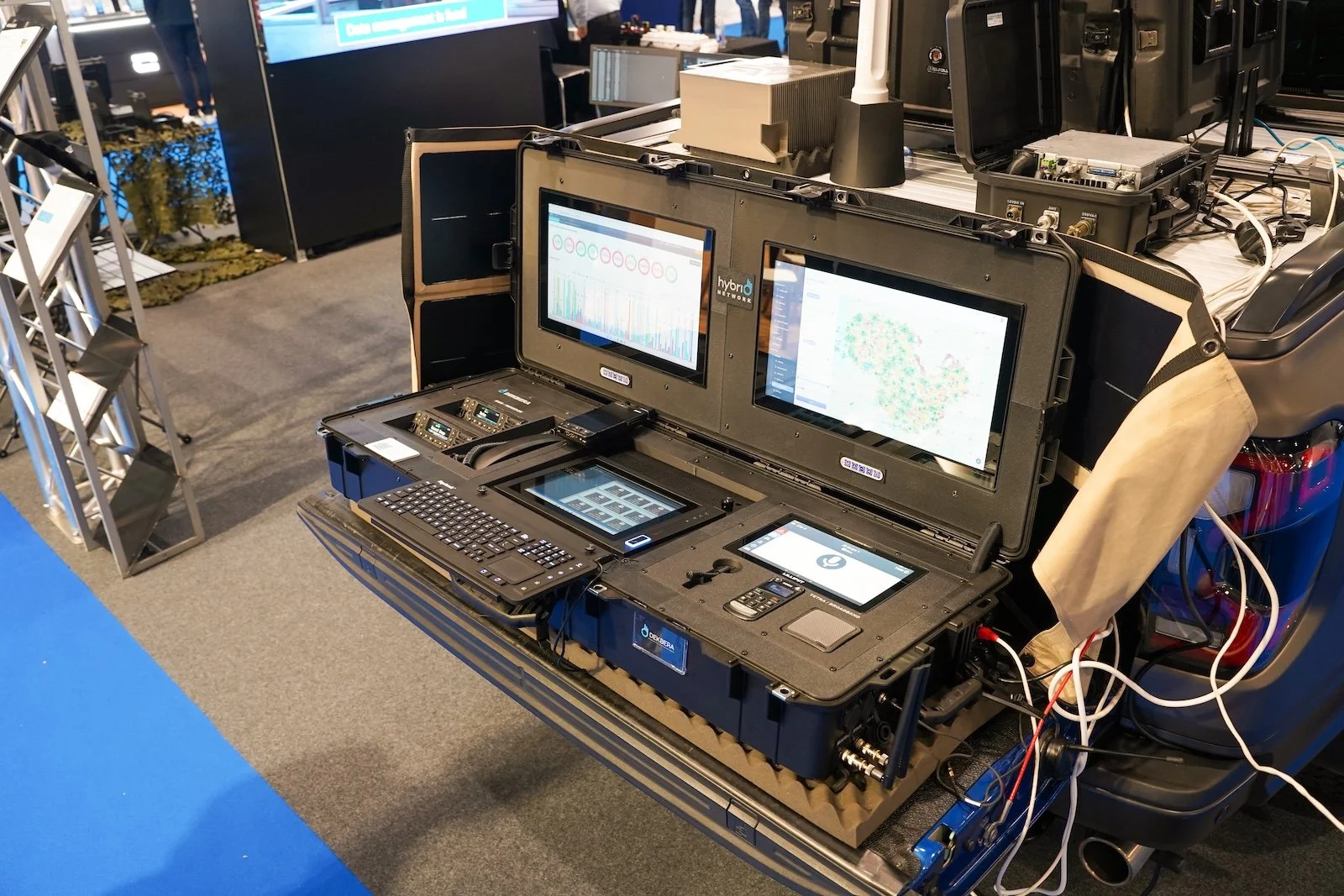
The Critical Communications World 2026 at London’s ExCeL Centre offered a fascinating insight into an industry that increasingly sits at the heart of modern public safety, defence and national resilience.
Walking the exhibition floor, it quickly became apparent that the future of critical communications is no longer a distant ambition. Conversations around mission-critical LTE, private 5G networks, interoperability and resilient communications dominated both the conference sessions and the exhibition stands.
One of the highlights of the day was spending time with several UK companies operating at the forefront of the sector. The team at Roke provided a valuable insight into their work across secure communications, sensing and advanced engineering, demonstrating how their expertise supports both defence and national security applications.
Equally interesting was visiting Rowden, whose approach to solving complex defence and national security challenges through modern software engineering and user-centred design continues to stand out. Their focus on rapidly delivering operational capability reflects many of the themes discussed throughout the conference.
It was also a pleasure to spend time with Sonic Communications, gaining a better understanding of their specialist communications capabilities and the role they play in delivering resilient and secure solutions to demanding operational environments.
Another standout conversation came at the Microamp stand. Learning more about their RF and microwave expertise highlighted the often unseen technologies that enable reliable communications systems to function in some of the world's most challenging environments.
Beyond the exhibition floor, the conference sessions reinforced the importance of interoperability as organisations continue the transition from legacy radio systems towards broadband communications. The UK Emergency Services Network programme, alongside developments in mission-critical services and private networks, remained a major topic of discussion throughout the day.
Perhaps the greatest strength of Critical Communications World is the diversity of organisations represented. Defence, public safety, emergency services, transport operators and technology companies all share the same space, creating valuable opportunities for collaboration.
Leaving ExCeL at the end of the day, the overriding impression was clear: critical communications is entering a new phase, one driven not simply by technology, but by resilience, interoperability and the partnerships needed to support increasingly complex operational environments.
You Might Also Like:
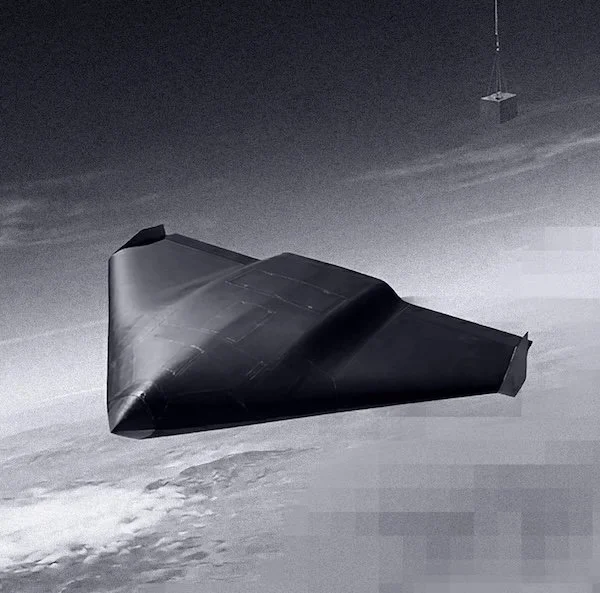
In this episode, we speak to Victor Süsskind, founder of Planetfall, building the infrastructure layer between air and space.
Focused on ‘near space’, Planetfall uses high-altitude balloons to lift payloads above weather and much of conventional air defence, before releasing a guided parafoil to deliver them to a target.
We get into the technology, the operational thinking behind it, and why near-space systems could become increasingly important to future warfare.
In this episode, we talk with Francis Jones, founder of Battle Bottle, a UK defence tech company developing an AI brain that sits between sensors and effectors to make the most cost-optimised drone deployment decisions.
We discuss how to reduce decision fatigue as operators have an increasing number of uncrewed systems at their disposal, how AI can help improve the cost asymmetry of modern warfare, the growing role of simulation in training and developing autonomous systems, and the future of human-machine teaming.
In this episode we talk to David Collins OBE at Nova Blue Technologies, to explore some of the fastest-moving challenges facing defence and critical industries.
We discuss whether AI is democratising offensive cyber capabilities faster than organisations can respond, how human error continues to underpin many successful breaches, whether cybersecurity awareness training needs a complete rethink, and how defence companies can harness AI without creating new risks.
In this episode, we talk with former MQ-9 Reaper Instructor turned uncrewed systems, human factors and autonomy expert, Tanner Yackley
Having supported over 1,000 combat missions and accumulated more than 3,400 flight hours, Tanner brings his first-hand experience of operating advanced autonomous systems to discuss the rapid evolution of uncrewed systems, the role of AI-enabled capabilities, and how human-machine integration will shape the next generation of defence operations.
In this episode, we sit down with Perry Boyle, founder of MITS Capital, to explore the rapidly evolving defense innovation ecosystem emerging from Ukraine.
We discuss how defense innovation can be funded, scaled and delivered at speed, the pioneering uncrewed ground systems they’re seeing and supporting, resilient communications, and how connecting global capital with companies is helping shape the future of modern warfare.
In this episode, we talk with Tom Sefton-Collins, a former GCHQ operational leader turned founder of Ghost Shift, a British defence technology company helping governments and industry achieve information dominance.
We discuss Europe's rearmament, why information has become a strategic capability in its own right, the challenges defence organisations face when navigating vast amounts of data, and how Ghost Shift is helping to make faster, better-informed decisions through intelligent software.
In this episode, we speak with Heiti Kruusmaa, Co-founder and COO of C2GRID, a European defence tech company transforming drone footage into near real-time, hyper realistic 3D environments to give operators a richer understanding of the battlespace.
We discuss how the character of warfare is changing, the growing importance of geospatial intelligence, the challenges of making sense of vast amounts of battlefield data, and how AI-powered 3D reconstruction is helping commanders make better-informed decisions.
In this episode, we talk to Christian Haarmeijer, the founder and CEO of RE-liON, a European defence technology company that develops immersive training, human performance optimisation, and decision-support systems for military and security organisations.
In the episode, we talk with Evaristo Parra and Milo Van Dall, the founders of BioGate, an LA-based start-up building real-time biosecurity compliance infrastructure ahead of the US BIOSECURE Act coming into force.
We talk about how they saw fragmented compliance processes were becoming a choke point for biotech companies, how a pre-legal audit layer surfaces potential issues, and how efficient use of legal expertise gives biotech companies the ability to move faster and stay focussed.
In this episode, we talk with Graham Booth, the founder of 2IC, a defence tech company getting digital platforms to communicate with each other in contested environments.
We discuss how data moves through the battlefield, how 2IC created a new software architecture that acts as the “glue” between unmanned platforms, What the UK-controlled sovereign stack, SCEPTRE is all about and how to make legacy systems work with new defence tech.
In the episode, we talk to Daniel Lansley, director and co-founder of Unbreakable Projects, a defence company that offers validation-as-a-service to test products, systems, and technologies in some of the world’s most hostile and unpredictable environments.
We talk about their first project, Mission 001 on Everest taking place in the next few weeks, the need to test new hardware solutions in the high north due to the current geopolitical situation and their advisory team that brings together former Tier 1 special forces and Commando veterans.
In this episode, we talk to Hugo Jammes, former British Army Officer, former Managing Partner of the UK’s National Security Strategic Investment Fund (NSSIF) now general partner at EDT Ventures.
We talk about the current geopolitical situation, the trends in defence investing, the dangers of innovation theatre, the NATO emerging technologies strategy and the need to think internationally.
In this episode, we talk to James Milnes, founder of MissionOpsAI, a UK-based defence tech company focused on bringing 'Mission Command' governance and data sovereignty to defence.
We discuss how the lack of transparency and control in current AI models is affecting high-stakes industries, how their work enables organisations to orchestrate multi-model AI workflows on their own infrastructure, maintain total data sovereignty, and ensure every autonomous decision is backed by an immutable audit trail.
In this episode, we talk to Mark Smith, founder of BCE Defensive, a UK-based defence company focused on protecting the vital organs on soldiers.
We discuss the difficulties of protection from a penetrating neck injury, how their NG-Serpa allows soldiers to operate in challenging environments whilst being protected from fragmentation, and how the feedback they got from Ukrainian soldiers helped them to develop the product.
In this episode, we talk to Stuart Snedden, co-founder of 1415 industries, a UK-based defence tech company focused on counter-drone training and simulation.
We discuss their journey to create their innovative Banshee platform, how modern EW is affecting the battlefield and how their work enables operators to experience real-world drone behaviours, test counter-UAS systems safely, and validate readiness before deployment.
In this episode, we talk to Tim Taylor, Founder and CEO of Tiburon Subsea, a company that’s been developing highly innovative Hovering Autonomous Underwater Vehicles to help democratise ocean data.
We discuss his 30-year career in marine exploration, the development of the JETTE™ propulsion system, his inspiring work finding lost submarines and the future of underwater autonomous vehicles.
About the Author:
Chris is the founder of Hiatus.Design, a mission-driven branding and website design company that works with clients all over the world.
Over the course of his life, he has travelled to more than 60 countries across six continents, earned two Guinness World Records, completed the legendary Marathon des Sables, summited Mont Blanc and unclimbed peaks in Asia, become a Fellow of the Royal Geographical Society (FRGS), rowed across the Atlantic Ocean and obtained a Masterʼs degree in Business Management (MA).