Low-cost drone interception is now a strategic imperative for everyone
Uncrewed aerial systems (UAS) have evolved from niche military platforms into widely available technologies used across commercial, industrial, and recreational sectors.
Their rapid proliferation has unlocked enormous economic value, enabling new services in logistics, agriculture, infrastructure inspection, and media production. Yet the same accessibility has created a parallel security challenge. Low-cost drones are now capable of surveillance, disruption, and attack, making them attractive tools not only for militaries but also for criminal groups, insurgents, and hostile states.
This shift has forced governments and organisations to rethink how they defend airspace. Counter-uncrewed aerial system (C-UAS) capabilities were once viewed as specialist military technologies. Today they are increasingly recognised as essential infrastructure for protecting critical facilities, public spaces, and national security interests.
The key issue is economics. Modern drones can be extremely inexpensive, while the systems designed to stop them often remain costly and complex. As a result, the future of drone defence will depend on the development of scalable and cost-effective countermeasures.
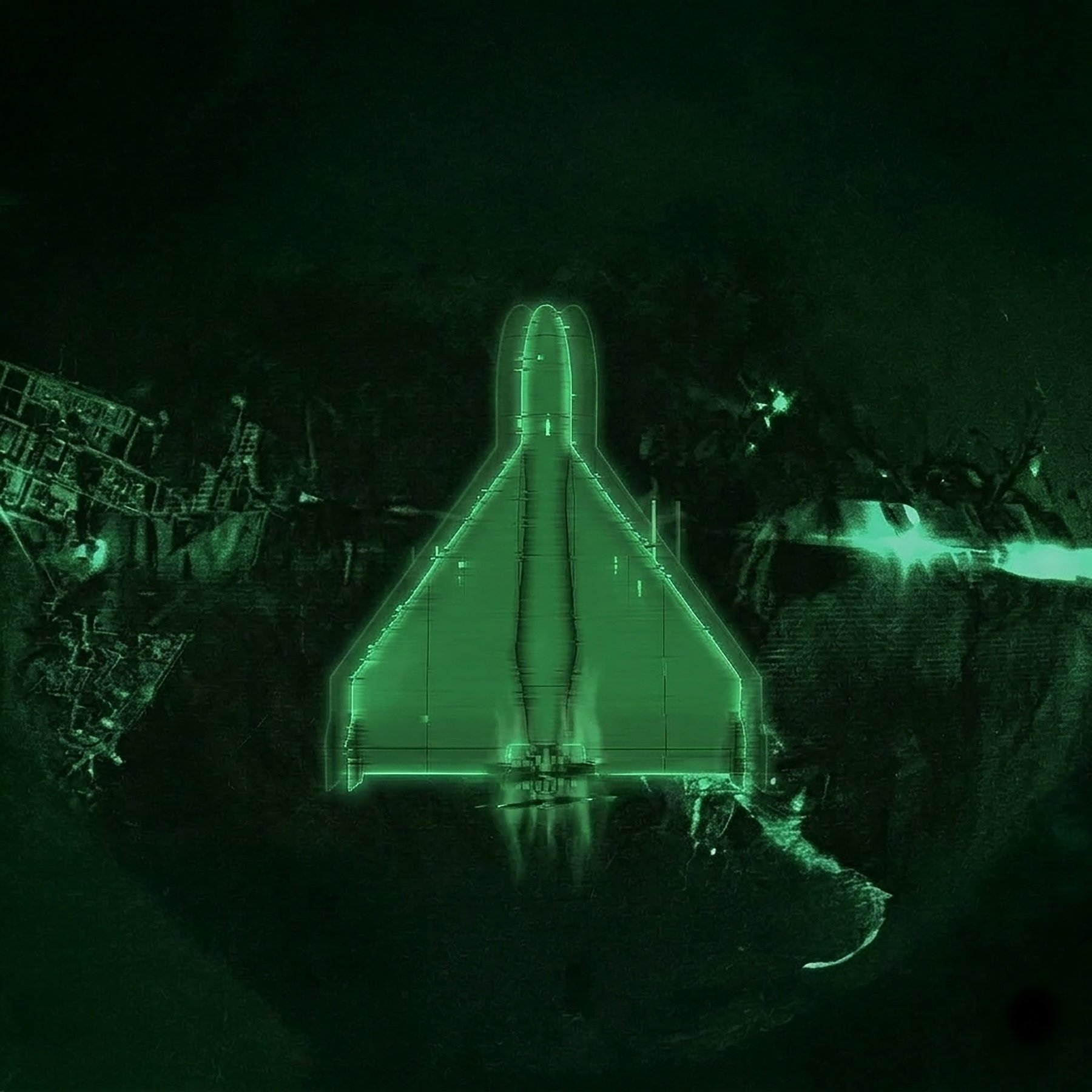
Image of Shahed UCAV created by Hiatus.Digital
The global expansion of drone technologyDrones are now embedded in the rapidly expanding global digital economy. The European Commission has identified the development of a large-scale drone market as a strategic priority, highlighting the potential for unmanned aircraft to transform sectors ranging from transportation to emergency services (1). At the same time, European policymakers acknowledge that the widespread adoption of drone technology introduces new security risks that must be addressed alongside economic growth.
Research conducted by the European Commission’s Joint Research Centre has focused on the development of both drone technologies and counter-drone systems, examining how detection, tracking, and identification technologies can be deployed to protect citizens and infrastructure while ensuring safe integration into civil airspace (2).
As drone use expands across commercial and civilian sectors, governments are increasingly aware that the security dimension must evolve in parallel.
Lessons from modern conflictRecent conflicts have demonstrated how inexpensive drones can reshape the battlefield. One of the most prominent examples is the use of Iranian-designed Shahed unmanned combat aerial vehicle (UCAV). These one-way attack drones are designed to strike targets by crashing into them and are estimated to cost tens of thousands of dollars per unit, far cheaper than many traditional precision weapons (3).
Their relatively low cost allows them to be deployed in large numbers, overwhelming defensive systems through volume rather than sophistication. Analysts have noted that the cost of intercepting such drones using conventional air defence systems can be dramatically higher than the cost of producing the drones themselves (4).
This economic imbalance has been highlighted during recent hostilities in the Middle East, where large numbers of drones and missiles have forced allied air defence systems to expend expensive interceptors in response (4). The dynamic illustrates a central challenge of modern air defence: defending against low-cost aerial threats using high-cost defensive systems is not sustainable over time.
The war in Ukraine has further illustrated the scale of the problem. Russia’s repeated use of loitering munitions and attack drones against Ukrainian infrastructure has pushed Ukraine to develop innovative counter-drone strategies. Ukrainian forces have deployed a mix of electronic warfare systems, radar, acoustic sensors, and low-cost interceptor drones to defend cities and energy networks.
The country’s experience has generated valuable operational knowledge. According to multiple reports, Ukrainian counter-drone expertise is now attracting interest from countries across the Middle East and from Western defence partners seeking to learn from battlefield innovations (5)(6)(7).
This transfer of knowledge highlights how rapidly drone warfare concepts are evolving. The technologies and tactics developed in one conflict are increasingly shaping defence strategies elsewhere.
Stuart Sneddon, co-founder of 1415 Industries, highlights that while the Shahed’s CONOPS and elements of its design echo the 1980s West German DAR anti-radiation drone programme, an early attempt at a loitering “suicide” UAV, it is only modern advances in guidance, autonomy, and scalable manufacturing that have made these concepts viable at scale and at cost (12).
Building cost-effective counter-drone capabilitiesAs drone threats evolve, governments and defence organisations are investing heavily in new detection and mitigation technologies. A growing emphasis is being placed on solutions that are affordable and scalable.
The United States Defense Innovation Unit (DIU) has launched initiatives aimed specifically at identifying low-cost sensing technologies capable of detecting drones across large areas. The organisation’s C-UAS Low-Cost Sensing Challenge aims to reduce the cost of drone detection systems while maintaining operational effectiveness (8). Early testing suggested that emerging sensing technologies could reduce system costs by up to 80 percent compared with existing solutions.
In the United Kingdom, innovation programmes have also supported the development of affordable detection technologies. Through UK Defence Innovation (UKDI, a recent amalgamation that included the Defence and Security Accelerator (DASA)), the UK government funded the development of a Passive Detection and Ranging (PDAR) sensor capable of detecting drone radio-frequency emissions. The technology uses software-defined radios and machine learning algorithms to identify drone signals without emitting detectable transmissions (9).
Following successful trials, the Royal Navy procured multiple PDAR systems for operational deployment. The system’s passive design and relatively low cost make it suitable for use across ships, vehicles, and fixed infrastructure sites.
These examples illustrate a broader trend towards modular and scalable counter-drone architectures. Rather than relying exclusively on expensive air defence systems, security planners are increasingly exploring distributed networks of sensors and low-cost defensive tools.
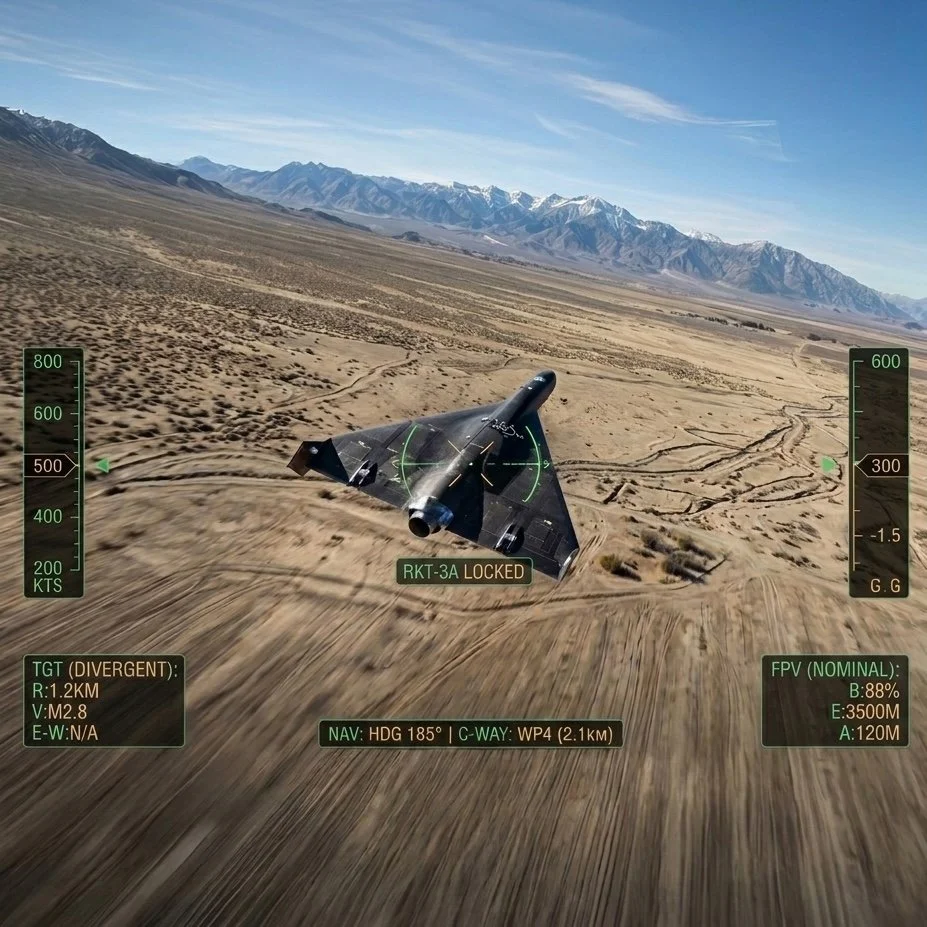
Image of Shahed UCAV created by Hiatus.Digital
Layered defence and protective securityEffective counter-drone strategies typically rely on layered defence architectures. Detection technologies such as radar, radio-frequency monitoring systems, cameras, and acoustic sensors can be combined to provide early warning of approaching drones.
Security authorities emphasise that these technologies must be integrated within broader protective security frameworks. The UK National Protective Security Authority recommends that organisations begin by assessing how drones could be used to conduct surveillance, disrupt operations, or deliver harmful payloads before selecting appropriate mitigation technologies (10).
A layered approach may include early detection systems, electronic countermeasures such as signal jamming, and physical interception technologies. Importantly, the choice of countermeasure depends heavily on legal frameworks governing airspace management and the use of electronic warfare systems.
As James Milnes, a former British Military officer and founder of Mission Ops AI makes clear, “detection and effector technologies are necessary but not sufficient. Between the sensor detecting a drone and the countermeasure being authorised, there is a decision infrastructure that is often the weakest link. C-UAS engagements involve competing legal obligations, layered authorities, and time-critical judgements. These are not administrative questions. They are operational ones.”
Policy coordination and regulatory frameworksGovernments are also working to strengthen policy frameworks for drone security. The European Union has introduced an Action Plan on Drone and Counter-Drone Security designed to improve coordination between member states, enhance detection capabilities, and support the development of a competitive European counter-drone industry (11).
These initiatives recognise that the challenge of drone security extends beyond military operations. Airports, energy infrastructure, public events, and government facilities all face potential drone threats.
By developing shared standards and encouraging technological innovation, policymakers aim to ensure that defensive capabilities evolve alongside the rapidly expanding drone economy.
A new security baselineThe proliferation of drones has fundamentally altered the relationship between cost and capability in modern security environments. Small, inexpensive aerial platforms can now perform missions that once required sophisticated military aircraft.
For defenders, the challenge is clear. Protecting infrastructure and populations from drone threats requires solutions that can be deployed at scale and sustained over time.
Cost-effective counter-drone technologies will therefore play an increasingly central role in future security strategies. Passive sensing systems, distributed detection networks, and inexpensive interceptor drones are likely to become key components of layered defence architectures.
The lessons emerging from recent conflicts and technological innovation are difficult to ignore. Drone capabilities will continue to expand, and their accessibility will continue to grow.
In this environment, the ability to detect, track, and neutralise drones efficiently is no longer a niche capability reserved for advanced militaries. It is rapidly becoming a core requirement for modern security systems.
Cost-effective C-UAS solutions are therefore not simply a technological challenge. They are a strategic imperative for everyone.
Also By Us:





References
(1) European Commission. Drone strategy: Creating a large-scale European drone market.
(2) European Commission Joint Research Centre. Drones, counter drones and autonomous systems.
(3) Carnegie Endowment for International Peace. Lessons from Iran’s Shahed drone programme.
https://carnegieendowment.org/emissary/2026/03/iran-drones-shahed-us-lessons
(4) CNBC. Iran’s Shahed-136 drones and the cost of air defence.
(5) CNN. Ukraine’s counter-drone expertise attracts interest from the Middle East.
https://edition.cnn.com/2026/03/07/world/ukraine-counter-drone-expertise-middle-east-intl-cmd
(6) BBC News. Ukraine’s growing drone warfare expertise.
https://www.bbc.co.uk/news/articles/cr5llg0e9g9o
(7) Al Jazeera. Ukraine touts drone expertise amid US-Israel conflict with Iran.
(8) Defense Innovation Unit. DIU presents C-UAS low-cost sensing challenge.
https://www.diu.mil/latest/diu-presents-c-uas-low-cost-sensing-challenge
(9) UK Government. Defying drones: DASA funded anti-drone sensor is purchased by the Royal Navy.
(10) National Protective Security Authority. Counter-Uncrewed Aerial Systems (C-UAS) guidance.
(11) European Commission. Action plan on drone and counter-drone security.
https://digital-strategy.ec.europa.eu/en/library/action-plan-drone-and-counter-drone-security
(12) Mortimer, G. (2025). Die Drohne Antiradar – the original Shahed drone. sUAS News. https://www.suasnews.com/2025/07/die-drohne-antiradar-the-original-shahed-drone/